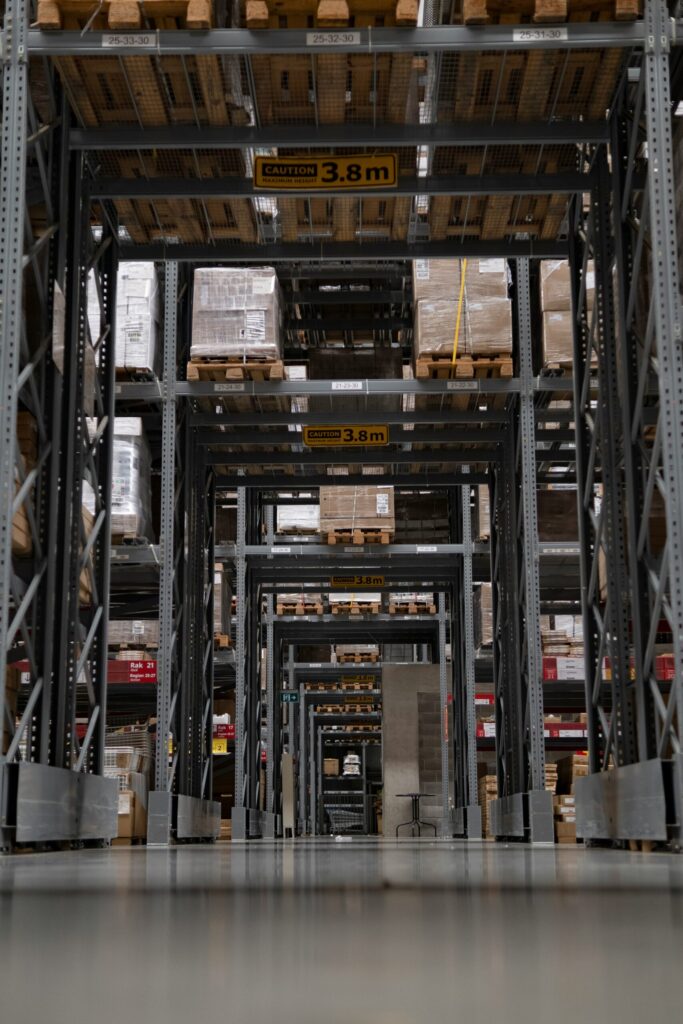
The Amazon employment is massive. As of early 2025, the company employs about 1.56 million people globally. Roughly 1.1 million of those work in the United States, making Amazon one of the largest private employers in the country.
That workforce breaks down into two very different worlds:
Fulfillment, operations, warehouse, and logistics roles make up the bulk—probably 700,000+ workers. These are the people in the warehouses picking, packing, sorting, and loading. They’re driving delivery vans, working at sortation centres, and keeping the entire logistics machine running.
Corporate, tech, and administrative roles account for somewhere around 350,000-370,000 U.S.-based employees. Software engineers building AWS infrastructure, product managers deciding what features get developed, operations planners optimising the supply chain, HR staff, finance teams—the whole corporate apparatus.
These two segments of Amazon’s workforce have almost nothing in common. Different pay scales, different working conditions, different cultures, different futures. When people talk about “working at Amazon,” they’re usually talking about one of these two very different experiences.
Read Also: Temporary Jobs in the USA: Everything You Need to Know
Types of Amazon Employment
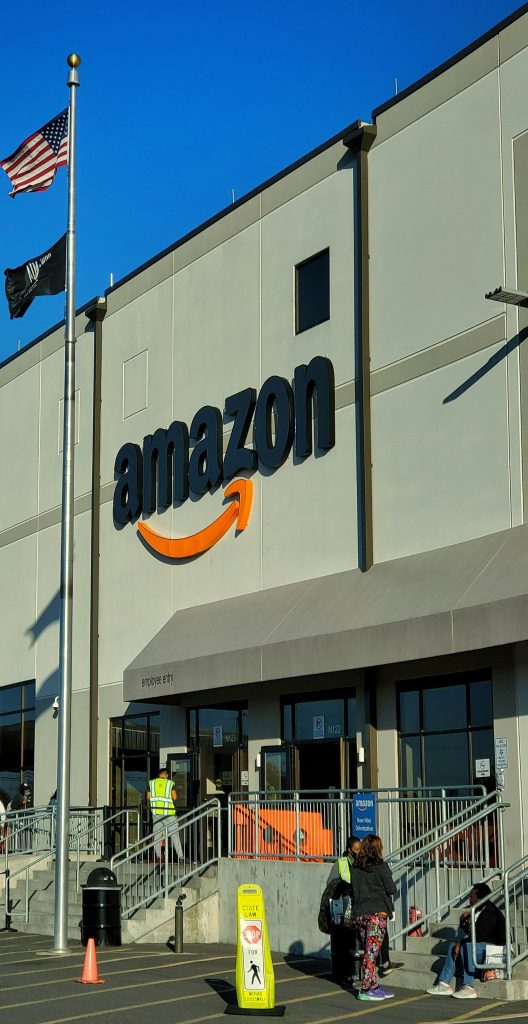 Let’s break down what working at Amazon actually means, depending on which part of the company you’re in.
Fulfilment and warehouse roles
These are where most people enter Amazon. You’re picking items off shelves to fill orders. You’re packing boxes. Also, you are loading trucks. You’re scanning barcodes thousands of times per shift. You’re standing for 10-12 hours with short breaks. Furthermore, you are hitting rate targets—items per hour—that the system tracks constantly.
These jobs are entry-level. No college degree required. Minimal experience needed. Amazon will hire you if you pass a background check and a drug test. For people who need work immediately, that accessibility matters.
Seasonal and temporary roles
These spike massively around Prime Day and the holidays. Amazon hires hundreds of thousands of seasonal workers to handle demand surges. Some get converted to permanent positions if they perform well, and there’s an ongoing need. Most get let go after peak season ends. It’s a revolving door.
Team leads, shift leads, and supervisory roles
These are the next step up from a warehouse associate. You’re managing a team, dealing with performance issues, and handling escalations. Slightly better pay, but you’re still in the warehouse environment, dealing with the same pressures—just now you’re also responsible for making sure everyone else hits their numbers.
Corporate and tech roles
These are a completely different universe. Software developers building AWS services. Data scientists optimising logistics algorithms. Product managers launching new features. Marketing teams, legal staff, and finance analysts. These roles require degrees, specialised skills, and experience. They pay well—six figures for many positions—but competition is intense, and the culture can be brutal in its own ways.
Career advancement and upskilling programs
They exist. Amazon advertises Career Choice, which provides tuition assistance for employees to get training in high-demand fields. The program is real—thousands of workers have used it—but it requires you to survive long enough at Amazon to qualify (usually 90 days to a year), maintain good standing, and have the energy after shifts to actually pursue education. Not everyone can.
Read Also: Amazon Work-From-Home Jobs in the USA- Here’s the Real Deal
Pay and Benefits for Warehouse Workers
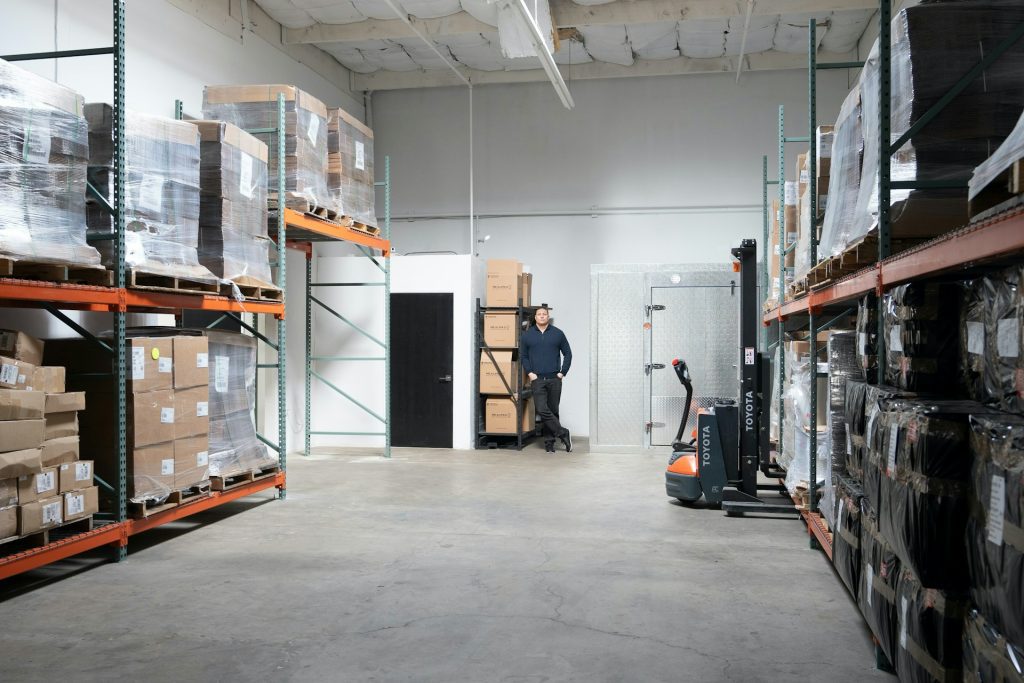 Let’s talk actual numbers for fulfilment and warehouse roles, because this is what most people want to know.
Base pay for U.S. hourly warehouse workers averages over $22 per hour as of 2025. Some locations pay more—$24-25/hour in high-cost areas or for night shifts. Including benefits, Amazon claims total compensation exceeds $29-30 per hour.
That $29-30 figure includes health insurance, 401(k) matching, and other benefits you don’t see in your paycheck. It’s not cash in hand. Your actual take-home is that $22/hour (or whatever your base rate is), which works out to roughly $45,000-$47,000 annually if you work full-time.
Seasonal workers typically start lower, around $18-20/hour, depending on location and timing. Still better than minimum wage in most states, but not as good as what permanent employees make.
Here’s what the benefits actually include:
Health insurance from day one.
This is real, and it’s better than a lot of employers offer. You don’t have to wait 90 days. Medical, dental, vision—the coverage exists. The premiums come out of your paycheck, but they’re available immediately.
401(k) with company match.
Amazon employment matches 50 cents for every dollar you contribute, up to 4% of your salary. If you’re making $22/hour and can afford to put money into retirement (big if), this helps.
Career Choice tuition assistance.
Amazon employment will prepay 95% of tuition and fees for courses in high-demand fields, up to a certain annual maximum. This sounds great—and it is for people who can take advantage of it—but you need to qualify, maintain employment, and have bandwidth outside of work to pursue classes. Many warehouse workers are too exhausted to realistically use this benefit.
Time off.
You accrue PTO and vacation time, though not as much as some employers. Unpaid time off (UTO) is available in limited amounts. But here’s the catch: taking time off during peak periods (Prime Day, holidays) is heavily discouraged or sometimes denied. If you call out sick during peak, you might get points against your attendance record.
So the compensation package looks decent on paper—$22+/hour with benefits is legitimately better than a lot of warehouse and retail jobs. But there’s a reason Amazon is constantly hiring despite paying relatively well. The working conditions matter, and we need to talk about those.
Read Also: Target Warehouse Jobs in the USA- Everything You Need to Know
What Warehouse Work Actually Feels Like
 Let’s be honest about what you’re signing up for if you take a fulfilment centre job.
The pace is relentless.
Amazon measures everything. Items per hour for pickers. Boxes packed per hour for packers. Scan rates for sorters. These aren’t suggestions—they’re requirements. Fall below the rate consistently, and you’ll get coaching, then write-ups, then termination.
You’re not just working fast. You’re working fast for 10-12-hour shifts with two 30-minute breaks and two 15-minute breaks. Except those breaks include the time it takes to walk from your station to the break room, which in a massive warehouse can be a 5-10 minute walk each way. So your 30-minute break becomes 15-20 minutes of actual rest.
The physical demands are brutal.
You’re on your feet all day on concrete floors. You’re bending, reaching, lifting, and moving constantly. Even with decent shoes (which you’ll need to buy—Amazon recommends steel-toe or composite-toe), your feet, back, and knees will hurt. Especially in the first few weeks.
Some roles are worse than others. Picking involves walking 10-15 miles per shift while carrying items. Stowing means lifting and placing items on shelves repeatedly. Packing is somewhat easier physically but mind-numbing in its repetition. Loading trucks is hot, heavy work.
The environment varies by facility.
Some warehouses are climate-controlled. Others aren’t, which means you’re working in 90-degree heat in summer or cold in winter. Amazon has made improvements after workers literally collapsed from heat exhaustion in some facilities, but not all warehouses are equally comfortable.
The monitoring is constant.
Scanners track your every move. How long between scans? How many errors do you make? Whether you’re meeting rate. Some facilities have cameras everywhere. Going to the bathroom counts against your productivity if you’re gone too long. It feels dystopian because it kind of is.
Social interaction is minimal.
You’re wearing earbuds with safety messages and notifications. Also, you’re focused on rate. You’re often not supposed to talk to coworkers during work. Some people like this—if you’re introverted, not having to deal with customers or chatty coworkers is fine. Others find it isolating and dehumanising.
Mandatory overtime happens, especially during peak.
You might work 50-60 hours a week during Prime Day or the holidays. Sometimes you get notice, sometimes you don’t. “Mandatory Extra Time” (MET) means you work when they tell you or face points/termination. This destroys work-life balance and makes planning anything outside of work impossible.
Read Also: Target Application in the USA — Everything You Need to Know
The Performance Metrics Reality for Amazon Employment
Amazon’s employment performance management system is where a lot of workers struggle.
You start with a certain number of points. Show up late? Points. Leave early? Points. Call out sick without PTO/UTO to cover it? Points. Accumulate too many points and you’re fired. The exact thresholds vary by facility, but generally, 6-8 points in a rolling period get you terminated.
Then there’s the rate. Every role has a target rate—items per hour or boxes per hour. You need to hit at least 90-95% of that rate consistently. Fall below, and you get coached. Continue falling below, and you get written up. Three write-ups often lead to termination.
Quality errors also count. Scanning the wrong item, packing something incorrectly, and damaging product—these get tracked. Too many quality errors and you’re in trouble regardless of how fast you work.
The system is designed to be strict. Amazon operates on the principle that it can always find another worker, so it doesn’t hesitate to terminate people who don’t meet standards. Turnover is incredibly high—some facilities see 100%+ annual turnover, meaning they completely replace their workforce every year.
This isn’t necessarily because all Amazon managers are cruel. It’s because the entire system is optimized for efficiency, and individual workers are treated as replaceable components. The algorithm doesn’t care if you’re tired, injured, or having a bad day. You hit rate or you’re gone.
Read Also: How to Prepare For Job Interview When Changing Careers in US
Amazon Employment: How to Survive Your First Month
If you take an Amazon warehouse job, here’s what you need to know to make it past the brutal first few weeks:
Invest in good shoes immediately.
Composite-toe work shoes with excellent arch support and cushioning. Spend $80-120 if you can afford it. Cheap shoes will destroy your feet and make every shift miserable. Some facilities offer shoe stipends—ask about this.
Stretch before, during, and after shifts.
Amazon provides stretching time at shift start. Actually do the stretches. During breaks, stretch your back, legs, and arms. After work, stretch again. This reduces injury risk and helps with soreness.
Learn your facility’s layout fast.
The faster you navigate the warehouse, the more time you have for actual rest during breaks. Memorise where the break rooms, bathrooms, and your work stations are.
Pace yourself strategically.
Yes, you need to hit the rate. But going all-out for 10 hours will destroy you. Find a sustainable pace that meets minimum requirements without burning yourself out. Experienced workers know how to work efficiently, not just frantically.
Use your time off wisely.
Don’t burn through all your PTO in the first month. Save some for when you really need it—sickness, exhaustion, important life events. UTO is there, but use it strategically because you only get limited amounts.
Document everything.
If you get injured, report it immediately and document it. If you receive coaching or write-ups that seem unfair, keep records. Amazon’s HR system isn’t always accurate, and having your own documentation helps if you need to contest something.
Make strategic friends.
Other workers will help you learn the ropes. Find experienced people who know shortcuts, tips for hitting rate, and how to avoid common mistakes. Don’t isolate yourself completely, even if the environment discourages socialising.
Mentally prepare for the grind.
The first two weeks are the hardest physically. Your body adapts somewhat, but it never becomes easy. If you’re thinking, “this is temporary until I find something better,” that’s realistic. Many people use Amazon as a bridge job, not a destination.
Read Also: Daily Pay Jobs in the USA- How to Apply and Salaries
Career Choice and Upskilling—Does It Actually Work?
Amazon heavily advertises Career Choice and other education programs. Here’s the reality:
The program is real and legitimate. Thousands of Amazon workers have used Career Choice to get certifications, associate degrees, and training in fields like healthcare, IT, and skilled trades. Amazon prepays tuition for approved programs, which is genuinely valuable if you can take advantage of it.
But there are barriers. You need to be employed for a certain period before qualifying (usually 90 days to a year, depending on the program). You need to maintain good standing—no write-ups, meet rate consistently. And you need the time and energy to pursue coursework outside of work.
That last part is where many people struggle. After a 10-12 hour warehouse shift, you’re exhausted. Finding motivation to study or attend classes is tough. If you’re working mandatory overtime during peak season, it’s nearly impossible.
Some workers successfully use it. They take online classes at their own pace. Also, they pursue certifications that don’t require classroom attendance. They slowly work toward degrees over several years while employed at Amazon. It’s doable, especially if you’re young, don’t have kids, and have high discipline.
Others find it impractical. If you’re already struggling with the physical demands, adding school on top feels impossible. If you’re barely making rate, you can’t risk jeopardizing your job by being too tired from coursework.
The program is a genuine benefit. It’s also somewhat misleading if presented as an easy path to advancement, because the reality of warehouse work makes sustained education pursuit difficult for many people.
Read Also: Best Jobs in the USA (2025 Guide)
The Corporate Side—A Different World
If you’re applying for corporate or tech roles at Amazon, you’re entering a completely different culture.
Pay is strong. Software engineers make $150,000-$300,000+ depending on experience and level. Product managers, data scientists, and other specialists earn six figures. Total compensation includes base salary, stock grants, and bonuses.
The culture is intense. Amazon corporate is known for its “Day 1” mentality and Leadership Principles. High expectations. Long hours. Constant pressure to deliver. The company isn’t shy about this—they want driven, obsessive people who put work first.
Some people thrive in this environment. They love the autonomy, the impact, the challenge. Others burn out quickly from the pace and the pressure. Amazon corporate turnover is also high, though different from warehouse turnover—people leave for other tech companies or startups, not because they can’t physically do the job.
Remote work has changed. Amazon mandated return-to-office policies for many corporate roles, requiring employees to be in physical offices multiple days per week. This caused backlash, and some talented employees left rather than return to offices. Policies vary by team, but the trend is toward less remote flexibility than during the pandemic.
Promotion and advancement are competitive. Amazon uses a forced ranking system (“stack ranking”) where employees are compared against each other. Top performers get promoted and rewarded. Lower performers get performance improvement plans or are pushed out. It’s Darwinian.
If you have the skills and temperament for this environment, Amazon corporate can accelerate your career and pay extremely well. If you value work-life balance, less stressful environments, or more collaborative cultures, it might not be a good fit.
Read Also: Admin Jobs in the USA: Pay, Progression, and Why You’re Not “Just” an Assistant
Common Complaints and Real Issues in Amazon Employment
Let’s address what workers consistently complain about:
Injury rates. Amazon warehouses have higher injury rates than industry averages. The combination of fast pace, repetitive motion, and physical demands leads to sprains, strains, and overuse injuries. Amazon has made efforts to improve safety, but the fundamental tension between speed and safety remains.
Dehumanising treatment. Many workers feel like cogs in a machine. The constant monitoring, the algorithmic management, the lack of flexibility—it feels impersonal and cold. You’re a number, not a person.
Unstable scheduling. Shift schedules can change with little notice. Mandatory overtime disrupts plans. Peak season consumes your life. For people with families or other responsibilities, this instability creates serious problems.
Limited advancement. Despite talk of career paths, moving from warehouse associate to anything significantly better is difficult. Becoming a team lead gives you marginally more pay but more responsibility and stress. Real advancement usually requires leaving the warehouse floor entirely, which requires either education (back to Career Choice) or years of persistence.
Bathroom breaks. This became infamous, but it’s real. Workers feel they can’t take bathroom breaks without impacting their rate. Some resort to wearing adult diapers during peak season to avoid losing time. Amazon denies this is a systemic issue, but enough workers report it that it’s clearly happening in some facilities.
The turnover treadmill. Amazon constantly hires because people constantly quit or get terminated. You watch coworkers come and go continuously. This creates instability and means you’re always working with inexperienced people who don’t know what they’re doing yet, which impacts team productivity and adds to your stress.
Read Also: Jobs that make $3000 a month without a Degree
When Amazon Employment Makes Sense
Despite everything above, Amazon employment makes sense for certain people in certain situations:
You need immediate income and have limited options. Amazon hires quickly and pays better than many alternatives for entry-level work. If you’re between jobs, need money fast, and can handle physical work, it’s a viable option.
You’re using it as a bridge. You’re in school, you’re transitioning careers, you’re saving money for something specific. Amazon work can be temporary while you figure out your next move. Just don’t let temporary become permanent without intending it to.
You’re strategic about Career Choice. You have a specific plan to use tuition assistance to gain credentials that lead to better employment (whether at Amazon or elsewhere). You’re disciplined enough to pursue education while working.
You value the benefits. Day-one health insurance matters if you have medical needs. 401(k) matching helps if you’re thinking long-term. For some people, these benefits outweigh the tough working conditions.
You don’t mind physical work and like clear expectations. Some people prefer knowing exactly what’s expected, hitting targets, and not dealing with office politics or customer service. If you’re that person, warehouse work might suit you better than other options.
Read Also: Security Guard Jobs in the USA
When Amazon Employment Doesn’t Make Sense
You have existing injuries or physical limitations. The work will aggravate injuries and create new ones. If you already have back problems, knee issues, or chronic pain, warehouse work will make things worse.
You need a work-life balance. Mandatory overtime and unpredictable schedules destroy personal life. If you have kids, need consistent schedules, or value time for hobbies and relationships, Amazon’s demands will conflict.
You’re easily stressed by performance pressure. The constant monitoring and rate requirements create anxiety for many people. If you don’t handle pressure well, you’ll be miserable.
You need social interaction. The work is isolating. If you’re extroverted and need regular human connection, Amazon warehouses will feel lonely and dehumanising.
You’re looking for long-term career stability. Unless you’re pursuing education/advancement aggressively or landing corporate roles, Amazon warehouse work is more of a treadmill than a ladder. Years can pass without meaningful advancement.
Read Also: Heavy Equipment Operator Jobs in the USA
Conclusion
Amazon is America’s largest private employer for a reason—they hire constantly because they need massive numbers of workers and because turnover is astronomical.
The compensation is competitive for entry-level work. The benefits are real. The accessibility (no degree required) matters. But the working conditions are demanding, the pressure is constant, and the culture treats workers as replaceable.
For some people at certain life stages, Amazon employment makes perfect sense. For others, it’s a last resort they regret taking. Know which category you’re in before accepting the job.
If you take an Amazon warehouse role, have an exit plan. Use Career Choice if you can. Save money aggressively. Build skills. Don’t assume you’ll stay long-term unless you actively want to pursue leadership within operations.
And if you’re applying for corporate roles, understand you’re entering one of the most demanding corporate cultures in America. High pay, high pressure, high turnover. Make sure that the trade-off works for you.
Amazon employment is not evil, and it’s not a saviour. It’s a company optimised for efficiency at scale, and workers are part of that optimisation calculation. Go into Amazon employment with your eyes open, extract what value you can, and make strategic decisions about how long to stay.