 So you’re interested in medical clinic jobs in the USA, possibly from Canada or another country. Maybe you’re a doctor, nurse, or allied health professional looking for opportunities abroad. Let me give you the real picture of what medical clinic jobs actually involve for international applicants—the roles that exist and genuinely might sponsor visas, but also the harsh reality that doctors face 3-7+ years of exams and residency before practicing, nurses face complex licensing barriers, and most entry-level clinic jobs don’t sponsor international candidates at all.
Read Also: Remote RN Jobs in the USA- Everything You Need to Know
What “Medical Clinic Jobs” Actually Means
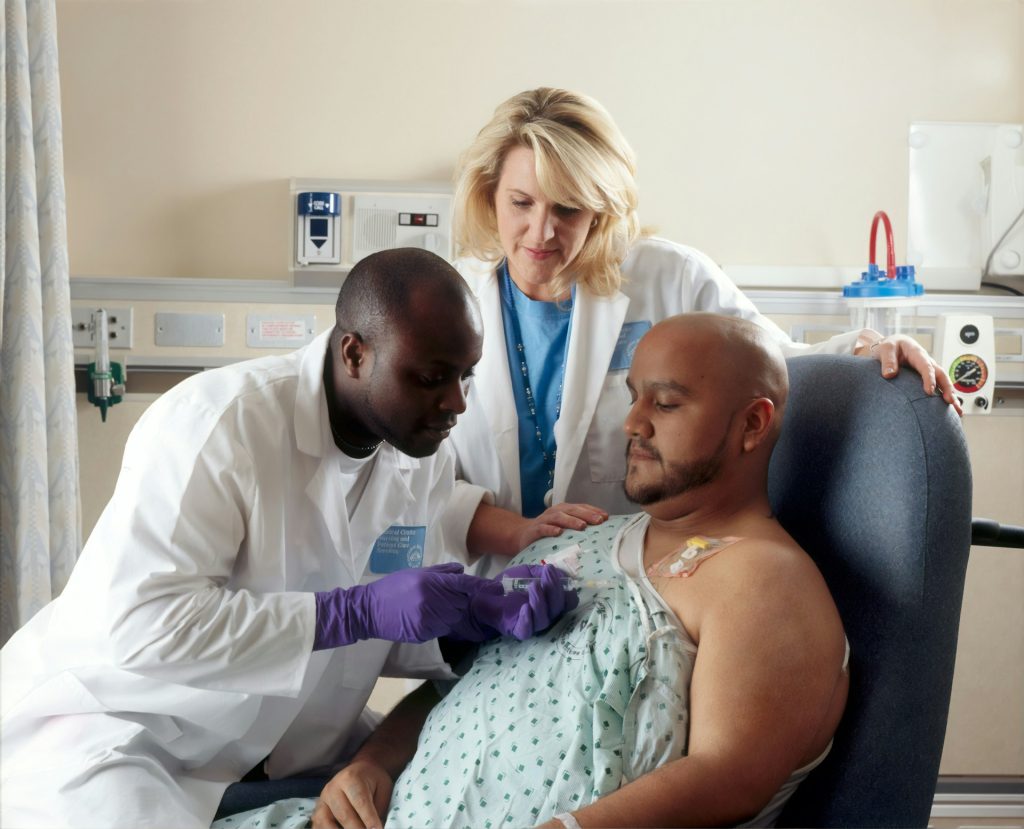
Medical clinics in the US range from small family practice offices to large outpatient centers operated by hospital systems. They’re not hospitals—no emergency rooms, no inpatient care—but they handle outpatient medical care: routine checkups, chronic disease management, minor procedures, diagnostic services.
Working in a US clinic could mean being a physician seeing patients, a nurse providing care, a medical assistant supporting clinical work, an x-ray tech performing imaging, a lab tech processing samples, or administrative staff handling billing and scheduling.
The role you can realistically pursue depends entirely on your credentials, your willingness to go through US licensing processes, and whether you need visa sponsorship.
Read Also: CVS Health Careers in the USA — Everything You Need to Know
The Different Roles and What They Actually Require
 Let’s break down what different medical clinic jobs involve and what it takes to get them as an international candidate.
Physicians / Doctors
To practice medicine in the US as a physician, you must:
- Pass USMLE exams (United States Medical Licensing Examination): Step 1, Step 2 CK (Clinical Knowledge), and Step 2 CS (Clinical Skills, though CS was discontinued during COVID and hasn’t returned). These are difficult exams testing medical knowledge and clinical skills. Many international medical graduates fail on first attempts. Preparation takes months of intensive study.
- Get ECFMG certification (Educational Commission for Foreign Medical Graduates): This verifies your medical school credentials and your USMLE performance. Without ECFMG certification, you can’t enter residency.
- Match into US residency: This is the brutal part. You apply to hundreds of residency programs, interview, and hope to match. International medical graduates (IMGs) have significantly lower match rates than US graduates—maybe 50-60% of IMGs match compared to 90%+ for US medical students. Many IMGs apply multiple years before matching.
- Complete residency training: 3-7 years depending on specialty. Family medicine is 3 years, internal medicine is 3 years, surgery is 5-7 years. During residency, you’re working 60-80 hour weeks for modest pay (around $60,000-$70,000 annually).
- Pass Step 3 and get licensed: After or during residency, you take USMLE Step 3 and apply for state medical licensure.
Timeline: 3-7+ years minimum from arriving in the US to practicing independently as a physician. Many IMGs take 5-10 years total when you factor in exam prep, multiple match attempts, and residency.
Cost: $50,000-$100,000+ for exam fees, application fees, interview travel, living expenses during residency when you’re making limited income.
Visa sponsorship: Some residency programs sponsor J-1 visas (which require you to return to your home country for 2 years after training unless you get a waiver, often by working in underserved areas). H-1B sponsorship for physicians exists but is competitive. Some rural hospitals and clinics sponsor J-1 or H-1B for physicians willing to work in underserved areas.
Pay after completing everything: Primary care physicians in clinics make $200,000-$250,000+ annually. Specialists make more. But you’re 3-7+ years away from that income.
Read Also: Primary Care Physician in the USA: Everything You Need to Know
Registered Nurses (RNs)
International nurses face their own complex path:
- Credential evaluation: Your nursing degree must be evaluated by CGFNS (Commission on Graduates of Foreign Nursing Schools) or equivalent to verify it meets US standards.
- Pass NCLEX-RN exam: The nursing licensure exam. It’s challenging and many international nurses fail on first attempts. You can take it in some countries or must travel to the US or a testing center.
- Get VisaScreen Certificate: Required for any nurse seeking to work in the US on most visa categories. This involves credential verification, English proficiency testing, and passing NCLEX.
- Obtain state licensure: Each state has its own nursing board with specific requirements. Some states are easier for international nurses than others.
- Find employer willing to sponsor visa: This is the challenge. Some large hospital systems and healthcare staffing agencies sponsor nurses on H-1B or EB-3 (green card) visas. But many employers prefer hiring nurses already authorized to work in the US.
Timeline: 1-3 years depending on how quickly you pass exams and find sponsorship.
Cost: $5,000-$15,000 for exams, credential evaluation, applications, immigration fees.
Pay: RNs in clinics make $60,000-$90,000 annually depending on location and experience. Less than hospital nurses typically, but still decent income.
Visa sponsorship: Some large healthcare systems, particularly those serving rural or underserved areas, actively recruit international nurses and handle visa sponsorship. Agencies like AMN Healthcare, Avant Healthcare, and similar companies specialize in placing international nurses.
Licensed Practical Nurses (LPNs) / Licensed Vocational Nurses (LVNs)
LPNs provide basic nursing care under RN supervision. The credential requirements are similar but slightly less stringent than RN. Pay is lower—$40,000-$55,000 typically.
Visa sponsorship for LPNs is rare because the US has adequate domestic supply. Unless you’re already in the US on another visa status, getting sponsored as an LPN is very difficult.
Read Also: Remote Nursing Jobs in the USA
Medical Assistants
Medical assistants help with clinical and administrative tasks in clinics—taking vital signs, preparing patients for exams, handling basic lab work, scheduling, documentation.
This role doesn’t require the same licensing as nurses or doctors. Some medical assistants have certificates or associate degrees, some get trained on the job.
Pay: $30,000-$45,000 annually. It’s accessible work but low-paying and visa sponsorship is essentially nonexistent. US employers can easily find local candidates for medical assistant roles—they have no incentive to sponsor international workers.
Allied Health Professionals (Radiology Techs, Lab Techs, Respiratory Therapists, etc.)
These roles require specific certifications or licenses:
- Radiology/X-ray technologists: Must pass ARRT certification exam, get state licensure. Pay $50,000-$70,000.
- Medical lab technologists: Need certification (ASCP or similar), state licensure in some states. Pay $50,000-$70,000.
- Respiratory therapists: State licensure required. Pay $55,000-$75,000.
Credential requirements for international candidates vary. Some can transfer credentials relatively easily, others face exam and training requirements.
Visa sponsorship exists but is limited. Larger healthcare systems in areas with shortages might sponsor, but it’s not common for most clinic positions.
Read Also: Medical Jobs in the USA- Everything You Need to Know
Administrative and Billing Staff
Medical billers, coders, receptionists, patient coordinators, and clinic managers—these roles keep clinics running operationally.
Pay ranges from $35,000-$60,000, depending on role and experience. These jobs rarely sponsor international candidates because there’s no shortage of domestic workers who can do administrative work.
Read Also: Medical Billing and Coding Jobs Paying $122,000 in the USA
The Visa Sponsorship Reality for Medical Clinic Jobs
 Let’s be brutally honest: most medical clinic jobs don’t sponsor international workers.
Roles where visa sponsorship exists:
- Physicians (especially willing to work in rural/underserved areas)
- Registered Nurses (RNs) with proper credentials
- Some specialized allied health roles in shortage areas
- Very occasionally, highly specialized technical or management roles
Roles where visa sponsorship is essentially nonexistent:
- Medical assistants
- Administrative staff
- Entry-level allied health positions
- Most LPN/LVN positions
Why clinics don’t sponsor:
Visa sponsorship is expensive ($5,000-$15,000+ in legal and filing fees) and time-consuming (months of paperwork and waiting). Employers only do it when:
- They can’t find qualified US workers
- The position is skilled enough to justify the cost
- They’re large enough to have immigration legal support
Small private practice clinics rarely sponsor. They don’t have the resources or the need. Large hospital-affiliated clinic systems sometimes sponsor hard-to-fill positions.
Geographic reality:
Rural and underserved areas have more physician and nurse shortages, making them more willing to sponsor international candidates. A clinic in rural Alabama is more likely to sponsor a physician or nurse than a clinic in Manhattan, where qualified local candidates are plentiful.
Read Also: Public Health Jobs in the USA (2025 Guide)
The Path That Actually Works for International Healthcare Workers
 If you’re serious about working in US medical clinics from abroad, here are the realistic paths:
For Doctors:
- Prepare for and pass USMLE exams while still in your home country if possible (you can take Step 1 and Step 2 CK internationally at Prometric centers).
- Get ECFMG certification.
- Apply to residency programs, focusing on those with history of accepting IMGs. Some specialties (family medicine, internal medicine, psychiatry) are more IMG-friendly than others (dermatology, orthopedics are nearly impossible for IMGs).
- If you match, complete residency on J-1 or H-1B visa.
- After residency, seek employment in underserved areas that might offer J-1 waiver sponsorship or work for larger healthcare systems that sponsor H-1B.
Nurses:
- Get your credentials evaluated and pass the NCLEX.
- Obtain a VisaScreen Certificate.
- Apply to large healthcare systems known to sponsor international nurses—look at major hospital systems in states with nursing shortages.
- Consider working with healthcare staffing agencies that specialize in international nurse recruitment. They handle visa sponsorship and placement.
- Be willing to work in less desirable locations initially—rural areas, underserved communities, and facilities that struggle to recruit nurses.
For Others:
If you’re not a doctor or RN, your best path is probably:
- Get to the US through other means (student visa for further education, family sponsorship, diversity visa lottery, etc.)
- Once you have work authorization through that pathway, then pursue clinic jobs
- Or develop highly specialized skills that make you attractive enough for an employer to sponsor
Read Also: Home Health Care Agency in the USA- Everything You Should Know
What Working in US Clinics Actually Involves
Let’s talk about what the work is actually like if you make it through the credential and visa barriers.
For Physicians:
You’re seeing 15-25 patients per day typically in outpatient clinic settings. Shorter appointments than many countries—often 15-20 minutes per patient. You’re using electronic medical records (EMR) extensively, which many international physicians find cumbersome initially.
The work is less autonomous than many international doctors expect. There are protocols, insurance requirements, quality metrics, and documentation requirements. You’re not just practicing medicine—you’re navigating a complex healthcare system with lots of administrative burden.
Nurses:
You’re providing direct patient care, administering medications, doing patient education, and coordinating with physicians. In clinics, it’s generally less stressful than hospital nursing—no overnight shifts, typically more predictable hours, and less acute illness.
But you’re also dealing with insurance issues, prior authorizations, patient compliance challenges, and all the frustrations of US healthcare delivery.
For Allied Health:
Your work is more routine and protocol-driven. You’re performing specific tasks—imaging studies, lab tests, respiratory treatments—according to physician orders and standard procedures. It’s good, stable work, but not particularly autonomous or exciting.
Read Also: Medical Aid Prices in the USA
The Pay vs. Cost-of-Living Reality for Medical Clinic Jobs
Healthcare workers in the US make decent money by global standards, but you have to factor in the cost of living and the debt/cost of getting credentialed.
A family medicine physician making $220,000 sounds great until you realize:
- You spent $80,000+ getting through the credential process
- You might have student loan debt from your original medical education
- Housing in many US cities is expensive ($1,500-$3,000+/month rent)
- Healthcare for yourself is expensive (yes, even for healthcare workers)
- You’re paying high US taxes
After all expenses, you’re living comfortably but not necessarily wealthy, especially in expensive cities.
Nurses making $70,000-$80,000 are solidly middle class, but again, factor in the cost of living. In rural areas, that income goes further. In New York or San Francisco, it’s tight.
Read Also: Molina Healthcare Providers in the USA: Access, Networks, and Members Experience
Should You Actually Pursue Medical Clinic Jobs?
Pursue US medical clinic jobs if:
- You’re a physician willing to invest 3-7+ years in exams, residency, and credentialing
- You’re an RN with strong credentials and a willingness to work in underserved areas initially
- You have financial resources to support yourself through the credential process
- You’re genuinely committed to practicing in the US long-term, not just seeking higher income short-term
- You understand and accept the complex visa and licensing requirements
Look elsewhere if:
- You need to work immediately and can’t invest years in credentialing
- You’re not a physician or registered nurse (other roles have very limited sponsorship)
- You can’t afford the $50,000-$100,000+ cost of getting credentialed and through residency
- You’re not willing to work in rural or underserved areas (where sponsorship is most available)
- You expect a simple, quick process (it’s not—it’s years of bureaucracy, exams, and waiting)
Read Also: Physical Therapy Assistant Jobs in the USA
Conclusion
Medical clinic jobs in the USA exist for international healthcare workers, but the path is long, expensive, and complex. Physicians face 3-7+ years of exams and residency. Nurses face credentialing and licensing hurdles, plus finding sponsors. Other healthcare roles rarely sponsor international candidates at all.
If you’re a doctor or nurse with strong credentials, a genuine commitment to working in the US, financial resources to support the process, and a willingness to work in areas that need healthcare workers, it’s achievable. Thousands of international medical graduates and nurses successfully work in the US.
But it’s not easy or quick. Don’t believe job listings that make it sound simple. The reality is years of exams, applications, waiting, and navigating complex immigration and licensing systems. Go in with realistic expectations about timeline, cost, and challenges, and it’s possible. Go in expecting a quick path to high income, and you’ll be disappointed.