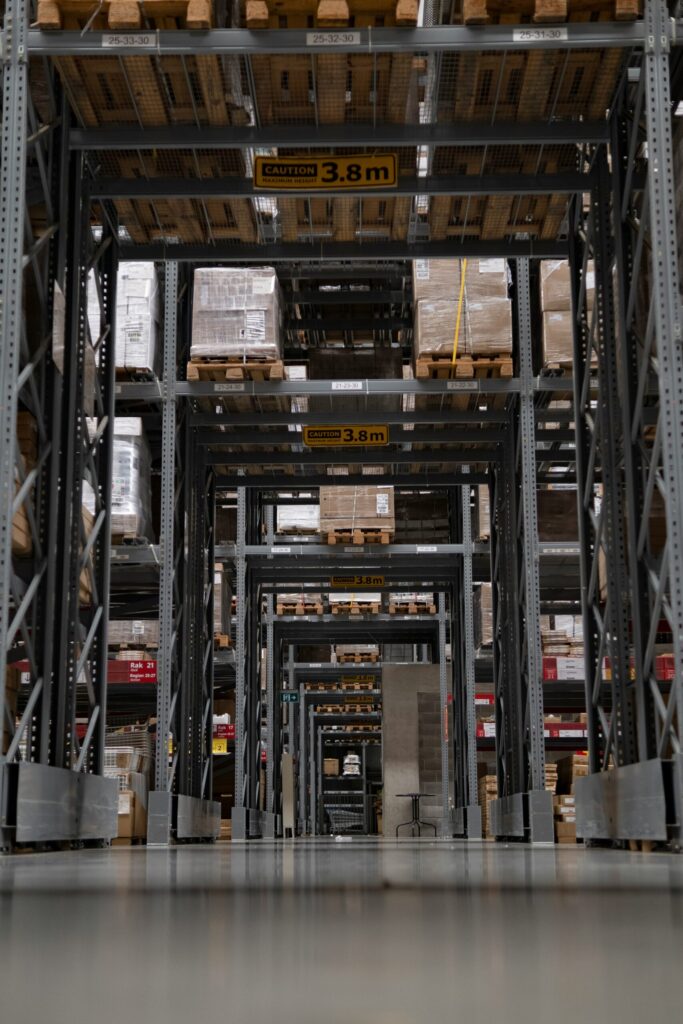
Target warehouse jobs are real opportunities with decent pay if you’re willing to handle the physical work and shift schedules. Here’s what’s actually happening with warehouse work at Target, what you’ll earn, what the job really involves, and whether it’s the right move for you.
Read Also: Travel Agent Jobs in the USA
What Kinds of Warehouse Jobs Target Actually Offers
 When people talk about “Target warehouse jobs,” they’re referring to distribution center work, not the retail stores. These are the massive facilities where products get received, sorted, packed, and shipped out to stores or directly to customers’ homes. It’s supply chain and logistics work, not customer-facing retail.
Warehouse Worker or Warehouse Associate
This is the entry-level position most people start with. You’re doing the physical work of the distribution center: receiving incoming freight, moving pallets, packing orders, loading trucks, unloading shipments, sorting merchandise. It’s hands-on, it’s active, and it’s repetitive.
This is where most people enter the system, and honestly, it’s where most people stay unless they actively pursue advancement or get noticed for leadership potential.
Seasonal and part-time warehouse positions
This pops up regularly, especially during busy periods like back-to-school and the holiday season from October through December. Target needs extra hands when order volume spikes, so they hire temporary workers. Some seasonal hires get offered permanent positions if they perform well and positions are available, but there’s no guarantee.
If you’re looking for temporary work or testing whether warehouse work suits you before committing long-term, seasonal positions are a way in. Just know you might be out of a job come January.
Lead Warehouse Worker or Warehouse Supervisor roles
These are the next step up. You’re overseeing a team, managing a specific area or shift, and handling more responsibility. You’re still involved in the physical work often, but you’re also coordinating people, troubleshooting problems, and ensuring your section meets productivity targets.
The pay bump is real for these positions, but so is the stress. You’re accountable for your team’s performance, which means dealing with staffing issues, pushing people to meet quotas, and handling the pressure from management above you.
Target’s distribution centers operate 24/7 in many locations, which means shifts around the clock. You might work days, evenings, overnight, or rotating shifts. The flexibility you have in choosing shifts depends on seniority and what’s available when you’re hired.
Read Also: Target Application in the USA — Everything You Need to Know
What You’ll Actually Earn (And What That Means in Real Life)
 Target warehouse workers average about $23.47 per hour across the U.S. based on recent data. Some positions start at $24.50 per hour and can increase to around $27 per hour with time, shift differentials, or seniority.
For lead or supervisory roles, you’re looking at $25 to $45 per hour depending on experience, specific responsibilities, and location. The higher end of that range is for experienced supervisors at higher-cost-of-living locations.
Let’s break down what $24 per hour actually means. That’s roughly $50,000 per year if you’re working full-time (40 hours per week, 52 weeks). Before taxes. After federal and state taxes, Social Security, and Medicare, you’re probably taking home around $38,000 to $42,000 depending on your state and tax situation.
Is that good money? It depends entirely on where you live and what your expenses are. In rural areas or lower-cost-of-living states, $50k is genuinely decent income for a job that doesn’t require a degree. You can afford an apartment, a car, basic living expenses, and maybe save a little if you’re careful.
In expensive cities or high-cost states, $50k is tighter. You might need roommates, you’re definitely not living luxuriously, and unexpected expenses can wreck your budget. But compared to minimum wage retail or food service jobs, it’s still significantly better pay.
Note
Shift differentials matter more than you’d think. Working overnight or less desirable shifts often adds an extra $1 to $3 per hour to your base pay. That might not sound like much, but over a year, an extra $2 per hour is about $4,000 more in gross income. If you’re willing to work nights when most people want day shifts, you can earn noticeably more.
Overtime is common in warehouse work, especially during peak seasons. Time-and-a-half means that $24 per hour becomes $36 per hour for overtime. If you’re regularly working 45-50 hours per week instead of 40, that extra income adds up fast. Some workers actively seek overtime to boost their earnings, while others hate it and avoid it when possible.
The catch with overtime: it’s often mandatory during busy periods. You might be required to work an extra shift or extend your shift when the facility is slammed with orders. You don’t always get to choose whether you want that overtime or not.
Benefits at Target for full-time warehouse workers typically include health insurance, 401(k) with company match, paid time off, and an employee discount. These aren’t glamorous benefits, but they’re real and they add value beyond your hourly wage. Health insurance alone is worth thousands of dollars per year if you’d otherwise be buying it yourself.
Part-time and seasonal workers usually get fewer benefits or none at all, which is why full-time positions are more valuable even if the hourly rate looks similar.
Read Also: Amazon Work-From-Home Jobs in the USA- Here’s the Real Deal
What to Expect From Target Warehouse Jobs (Beyond the Job Description)
The job descriptions say things like “receiving, packing, loading merchandise” and “operating equipment.” Let me translate what that actually means day-to-day.
You’re on your feet for your entire shift. Not occasionally standing or walking around — literally your entire 8-10 hour shift. You might walk 10,000 to 20,000 steps per shift, often on concrete floors. Your feet, legs, and back will hurt, especially at first. If you’re not used to physical work, the first few weeks are genuinely rough on your body.
You’re lifting, bending, reaching, pulling, and pushing constantly. Boxes, pallets, and merchandise of all shapes and sizes. Some items are light, some are awkward, some are heavy. Target provides training and expects you to use proper lifting techniques, but your body is still doing repetitive physical labor for hours.
You’re working at a pace set by productivity targets. Warehouses measure everything: how many orders you pack per hour, how many pallets you move, how quickly you process incoming freight. You’re expected to maintain a certain pace, and supervisors notice if you’re consistently slower than your coworkers.
Note
This isn’t “work at your own pace” employment. There’s pressure to move quickly and efficiently, especially during busy periods. Some people thrive with this structure and clear expectations. Others feel like they’re being pushed too hard constantly.
The work is repetitive and often monotonous. You might spend an entire shift doing the same task over and over: scanning items, packing boxes, moving pallets from point A to point B. If you need variety and mental stimulation in your work, warehouse jobs can feel mind-numbing.
The environment is loud. Forklifts beeping, conveyor belts running, pallet jacks moving, people communicating over the noise. You might wear earplugs or hearing protection. It’s industrial work in an industrial setting, not a quiet office.
Temperature can be an issue. Some parts of the warehouse might be climate-controlled, but loading docks and some areas aren’t. You might be working in the heat during summer or the cold during winter, depending on your role and location.
You’re operating equipment like pallet jacks, and possibly forklifts or other machinery depending on your role and training. Target provides training, but there’s a learning curve, and safety is taken seriously. Accidents can cause injuries, and unsafe behavior can get you fired.
Shift work impacts your life significantly. If you’re working overnight shifts (like 10 PM to 6 AM), your sleep schedule is flipped. You’re sleeping during the day when the world is awake, which affects your social life, family time, and general well-being. Some people adjust fine, others never get used to it.
Weekend and holiday work is common. Warehouses don’t shut down for weekends or most holidays. If you’re working Black Friday weekend or Christmas week, you’re probably working when your friends and family have time off.
Read Also: Logistics Jobs in the USA (2025 Guide)
The Application and Hiring Process (What Actually Happens)
 You apply through Target’s official career website, specifically looking for Supply Chain or Distribution Center positions. Don’t apply through random third-party sites — Target warns that they only hire directly through their platform, and other postings might be scams or outdated.
The application is straightforward: basic information, work history, and availability. Availability is huge. If you can only work Monday through Friday, 9 AM to 5 PM, you’re probably not getting hired. They want people with open or flexible availability, especially a willingness to work nights, weekends, and variable shifts.
Being honest about your availability is important, but know that limited availability limits your chances significantly. If you can genuinely work any shift, say so — it makes you more attractive as a candidate.
You might do a phone screen first, then an in-person interview. The interviews aren’t typically difficult — they’re assessing whether you understand the physical demands, whether you’re reliable, and whether you’ll show up consistently. Warehouse work has high turnover, so they’re looking for people who will actually stick around.
Common interview questions:
Can you handle physical work and being on your feet all day? Are you comfortable with shift work? Can you work as part of a team? Have you worked in similar environments before? They’re not trying to trick you; they’re trying to weed out people who will quit after two weeks because they didn’t realize how hard the work would be.
Background checks are standard. Drug testing is likely, especially for roles involving equipment operation. If you can’t pass a drug test, warehouse work at major companies like Target isn’t going to work out for you.
If you’re hired, there’s an orientation and training before you start working independently. You’ll learn safety protocols, how to use equipment, the layout of the facility, and specific procedures for your role. Pay attention during training — messing up due to not following procedures can get you injured or fired.
Read Also: Warehouse Jobs in the UK- Everything You Need To Know
Common Mistakes People Make in Target Warehouse Jobs (And Why They Quit Fast)
Mistake #1: Not preparing physically
You show up never having done physical work before, completely out of shape, and you’re shocked by how hard it is to be on your feet moving for 8-10 hours. Your body revolts. You’re in pain, you’re exhausted, and you quit within the first month.
If you know you’re not in great physical shape, start preparing before you start the job. Walk more. Do some strength training. Get used to being on your feet for longer periods. It won’t eliminate the adjustment period, but it helps.
Mistake #2: Underestimating shift work difficulty
You think working overnight or rotating shifts will be fine, then you discover how brutal it is on your sleep schedule, your social life, and your mental health. You’re exhausted all the time, you can’t maintain normal relationships or activities, and you quit.
If you’ve never worked night shifts before, really think about whether you can handle it. Talk to people who’ve done it. Understand that it’s not just about staying awake at night — it’s about your entire life adjusting to an abnormal schedule.
Mistake #3: Expecting it to be easier than it is
You think warehouse work is just “moving boxes” and can’t be that hard. Then you experience the pace, the pressure, the physical demands, the monotony, and you realize it’s actually difficult work that requires stamina and mental toughness.
Go into it with realistic expectations. It’s hard work. That’s why it pays better than retail or food service jobs that don’t require physical labor.
Mistake #4: Not giving it enough time
You quit after two weeks because it’s hard and you’re sore and you hate it. In reality, most people need at least a month to physically adjust and get into the rhythm of the work. Your body adapts, you get stronger, the work feels less overwhelming.
Unless you’re genuinely injured or it’s truly unbearable, push through the first month before deciding it’s not for you. Lots of people who almost quit in week two end up staying for years once they adjust.
Mistake #5: Burning bridges by no-call, no-show
You decide you’re done and just stop showing up without calling or officially quitting. This burns the bridge with Target and often shows up on employment verifications for future jobs. Always quit properly if you’re leaving — give notice, communicate, leave on professional terms even if you hate the job.
Mistake #6: Not taking advantage of advancement opportunities
You treat it as a dead-end job and never express interest in moving up or taking on more responsibility. Meanwhile, other people get promoted to lead positions with better pay. If you want to advance, you need to show up consistently, work hard, and actually express interest when opportunities arise.
Read Also: Admin Jobs in the USA: Pay, Progression, and Why You’re Not “Just” an Assistant
The Honest Downsides Nobody Mentions in Job Postings
The physical toll is real and cumulative. Your knees, back, and feet take a beating. Some people develop chronic pain issues after years of warehouse work. If you have pre-existing joint or back problems, this work can make them worse.
Wear good shoes — invest in quality, supportive footwear. Use proper lifting techniques. Take care of your body outside of work. This isn’t optional if you want to do this work long-term without destroying yourself.
The monotony can be mentally draining. Doing the same repetitive tasks for hours every day, week after week, can make you feel like a robot. Some people don’t mind this at all. Others find it soul-crushing. Know yourself and whether you can handle routine, repetitive work without going crazy.
Note
Shift work wrecks your social life and relationships if you’re on nights or rotating schedules. You’re sleeping when your friends and family are awake. You’re working when everyone else is free. Dating, maintaining friendships, being present for family events — all of this becomes harder when you work non-traditional hours.
The pressure to maintain pace can be stressful. You’re being monitored for productivity, and falling behind consistently can lead to conversations with supervisors or even termination. Some people perform well under this kind of structure. Others feel like they’re being treated like machines rather than people.
Mandatory overtime during peak seasons means your schedule isn’t entirely your own. You might plan on working 40 hours and end up required to work 50-55 hours for weeks at a time. The money is good, but the exhaustion and lack of personal time is real.
The work environment can feel impersonal. Large distribution centers employ hundreds of people. You might not develop close relationships with coworkers like you would in a smaller workplace. You’re focused on your tasks, and social interaction is limited.
Read Also: US Companies Hiring Foreign Workers: The Reality of Visa Sponsorship in 2025
Career Progression for Target Warehouse Jobs: What Moving Up Actually Looks Like
Most people start Target warehouse jobs as warehouse associates. If you show up consistently, work at an acceptable pace, follow safety rules, and don’t cause problems, you’re doing fine. That alone puts you ahead of people who quit quickly or perform poorly.
Moving up to a lead position typically takes 1-3 years, depending on turnover, your performance, and openings. You need to express interest in advancement — don’t assume you’ll be noticed. Tell your supervisor you’re interested in leadership opportunities. Ask what you need to do to be considered for promotion.
Lead positions involve managing a small team or overseeing a specific area. You’re making more money ($25-$30+ per hour instead of $24), but you’re also dealing with people management, which comes with its own stress. You’re accountable for your team’s performance, which means pressure from above and dealing with underperforming team members below.
Beyond lead positions, there are supervisor and manager roles, logistics specialists, quality control positions, and various supply chain career paths. These typically require more time, proven performance, and possibly additional training or education. But the opportunities exist if you’re willing to stick around and work toward them.
The people who build careers at Target distribution centers — staying 5, 10, 15+ years — are usually those who get promoted, specialize in specific areas, or find their niche within the operation. They’re not doing entry-level warehouse associate work for a decade; they’re advancing and taking on different responsibilities.
Read Also: Jobs that make $3000 a month without a Degree
Who Actually Succeeds in Warehouse Work (And Who Struggles)
People who do well:
- Those who are physically fit or willing to get in shape
- People who don’t mind repetitive work and can find mental ways to cope with monotony
- Workers who are reliable, show up consistently, and follow directions
- Those who can handle shift work without it destroying their health or life
- People who see it as a stepping stone and work toward advancement
- Workers who take safety seriously and don’t cut corners
People who struggle or quit:
- Those who are out of shape and not willing to push through the physical adjustment period
- People who need mental stimulation and variety in their work
- Workers with unreliable attendance or difficulty following structure
- Those who can’t handle night shifts or irregular schedules
- People expecting easy money for minimal effort
- Workers with pre-existing physical limitations that make the work painful or impossible
Read Also: Tractor Supply Jobs in the USA: The Real Story
When Target Warehouse Jobs Make Sense (And When They Don’t)
Target Warehouse Jobs are great if:
You need decent-paying work without a college degree. You’re physically capable and willing to handle active, repetitive labor. You can work non-traditional shifts or are okay with shift work. You need benefits and want full-time employment. You’re looking for an entry point into logistics or supply chain careers. You value clear expectations and structured work over creativity and variety.
Look elsewhere if:
You have physical limitations that make prolonged standing, walking, and lifting difficult. Also, you need a traditional Monday-Friday, daytime schedule. You need high mental stimulation and can’t handle repetitive tasks. You’re not reliable with attendance and punctuality. You’re expecting easy work for the pay rate. You can’t pass background checks or drug tests.
Target warehouse jobs are legitimate opportunities with competitive pay for work that doesn’t require a degree or specialized skills. The work is hard, the hours can be rough, but it’s stable employment with room for advancement if you’re willing to stick with it.