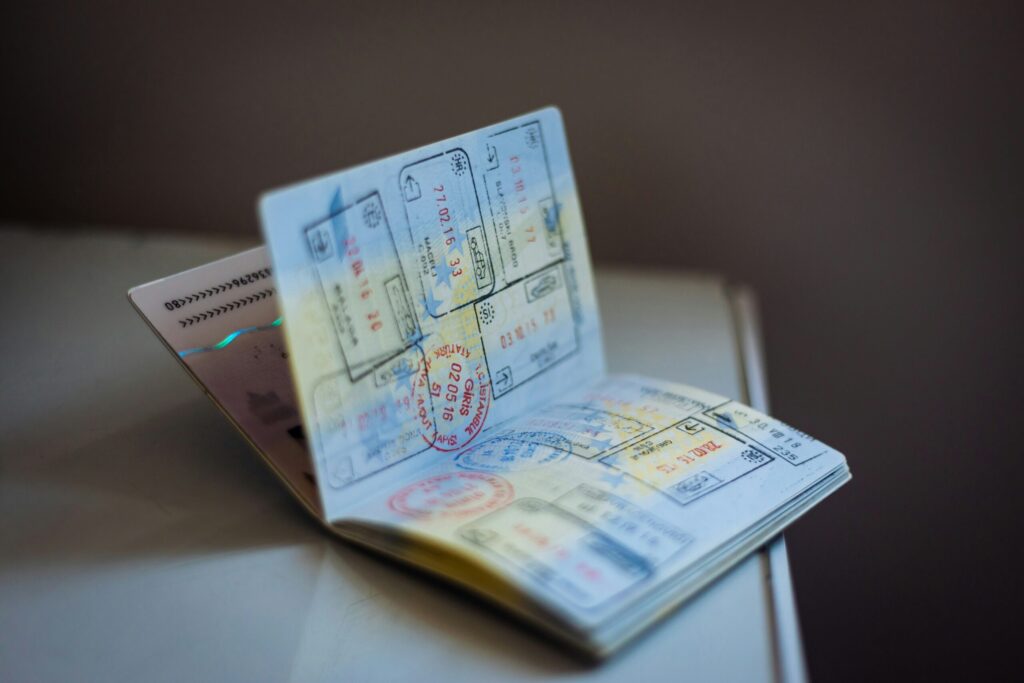
Travel agent jobs are great for people who love travel and customer service. Here’s the current state of travel agent jobs in the U.S., what opportunities actually exist, what you’ll earn, and the realities nobody mentions in the glossy “work from home planning dream vacations” ads.
Read Also: Remote RN Jobs in the USA- Everything You Need to Know
What Kinds of Travel Agent Jobs Actually Exist Right Now
 Traditional retail travel agents
They still exist, working in brick-and-mortar agencies. You’re helping walk-in clients book flights, hotels, cruises, and vacation packages. You’re answering questions, comparing options, and handling complex itineraries. It’s face-to-face customer service combined with detailed planning and booking work.
These jobs have declined over the past two decades as online booking has exploded, but they haven’t disappeared. People still walk into travel agencies, especially for complicated trips, destination weddings, group travel, or when they want expert guidance and don’t trust themselves to navigate booking everything online.
Corporate travel agent jobs
They are sometimes called travel consultants or coordinators — they specialize in business travel. You’re arranging flights, hotels, and ground transportation for companies. You’re booking conference travel for 50 employees, managing last-minute itinerary changes for executives, handling travel policy compliance, and often dealing with expense reporting systems.
This niche is more stable than leisure travel because companies need reliable business travel support regardless of whether consumers are DIY-booking their vacations. The pay tends to be steadier too, though the work can be high-pressure when you’re rebooking someone’s flight at 10 PM because their meeting got moved.
Remote and work-from-home travel agents
They are increasingly common. Many agencies now let agents work remotely, communicating with clients via phone, email, and video calls. You’re doing the same work as an in-office agent — planning trips, making bookings, providing customer service — but from your home office.
This flexibility appeals to a lot of people, but it also means more competition. An agency in Florida can now hire agents anywhere in the country, which expands the applicant pool for every position.
Independent or self-employed travel agents
They work as freelancers, often under what’s called a “host agency.” The host agency provides booking tools, training, insurance, and support, while you find and serve your own clients. You typically work on commission — you make money when you book travel, and you make more when you sell higher-value trips or packages that pay better commissions.
This path offers maximum flexibility but also maximum financial uncertainty. You’re essentially running your own small business, which means inconsistent income, no benefits, and you’re responsible for finding every single client yourself.
Specialty or niche agents
They focus on specific types of travel: luxury travel, cruises, adventure tourism, destination weddings, group trips, and eco-tourism. Specialization helps you stand out in a crowded market and often commands higher fees or better commissions.
A luxury travel agent planning a $30,000 African safari makes more than someone booking a $2,000 Cancun vacation package. A cruise specialist who knows every ship, every cabin type, and every port can provide value that generic online booking sites can’t match. Niche expertise is increasingly how travel agents survive and thrive.
Read Also: Voice-Over Jobs in the USA- Everything You Need to Know
What You’ll Actually Earn (The Real Numbers and the Commission Reality)
 According to the Bureau of Labor Statistics, the median annual wage for travel agents in the U.S. was $48,450 in May 2024. That breaks down to about $23 per hour. Middle-of-the-road income, not poverty wages, but not exactly comfortable in most cities either.
Entry-level agents typically earn around $33,280 per year. That’s roughly $16 per hour. If you’re starting in this field and living in a high-cost-of-living area, that’s genuinely hard to survive on. In lower-cost areas, it’s tight but manageable if you’re careful with money.
The top 10% of travel agents earn more than $74,000 annually. These are usually experienced agents with established client bases, agents who specialize in high-value travel, corporate travel specialists, or successful independent agents who’ve built strong businesses over the years.
For remote travel agents jobs specifically, recent data suggests average earnings of around $46,000 per year, which aligns closely with the overall median. Remote doesn’t automatically mean higher or lower pay — it’s about the same, just with different working conditions.
Here’s what most people don’t understand about travel agent compensation: much of your income often comes from commissions, not base salary. If you’re working for an agency, you might have a modest base salary plus commission on bookings. If you’re independent, you’re living entirely on commission.
Commissions typically range from 10% to 20% of the booking value, though this varies wildly by supplier (airlines, hotels, cruise lines, and tour operators all have different commission structures). Some suppliers have cut or eliminated agent commissions, which is why many agents now charge service fees directly to clients.
Let’s make this concrete. You book a $5,000 cruise for a couple. The cruise line pays you a 10% commission: that’s $500. Sounds great, except it might take you 3-4 hours of work across multiple conversations, research, and follow-up to close that booking. And if the couple cancels, you might lose that commission entirely.
Independent agents have even more variability. Some months you might book $50,000 in travel and earn $5,000-$8,000 in commissions. Other months you might book almost nothing and earn $500. This feast-or-famine income pattern destroys people who aren’t financially prepared for it.
Successful agents — the ones actually making good money — usually have a combination of: established repeat clients, niche specialization that commands premium prices, strong sales and marketing skills, and enough financial cushion to weather slow periods. Getting to that point takes time, often several years.
Read Also: Currency Exchange Jobs in the USA
What It Actually Takes to Become a Travel Agent (Beyond Just Loving Travel)
 The barrier to entry is low on paper. You need a high school diploma or GED. That’s it. No college degree required, no mandatory certification, no years of prerequisite experience. This accessibility appeals to a lot of people looking for career changes.
But here’s the catch: low barriers to entry mean high competition and lots of people who fail quickly. Just because you can become a travel agent with minimal qualifications doesn’t mean you’ll succeed as one.
Customer service and communication skills are non-negotiable.
You’re dealing with people planning vacations (which they’re excited about but also stressed about), business travelers who need efficiency, demanding clients with specific expectations, and occasionally people who are upset because something went wrong with their trip.
If you’ve never worked in customer-facing roles and you struggle with patience, clear communication, or managing difficult personalities, travel agent work will be miserable for you. You need to genuinely enjoy helping people and handling their problems, even when they’re being unreasonable.
Sales ability matters more than most people realize.
You’re not just taking orders. You’re convincing people to book through you instead of online, upselling travel insurance or excursions, recommending higher-value packages, and continuously finding new clients if you’re independent. If you’re uncomfortable with sales or you view it as pushy or manipulative, you’ll struggle to make decent money.
Organization and attention to detail are critical.
You’re managing multiple client bookings simultaneously, tracking deadlines for deposits and final payments, coordinating flights/hotels/transfers/tours that all need to align perfectly, and handling changes and cancellations. Miss one detail and you’ve got a client stranded at an airport or double-booked on hotels.
Technical knowledge about booking systems, travel software, supplier policies, and industry regulations
This takes time to learn. You need to understand how GDS (Global Distribution Systems) work, how to navigate multiple booking platforms, what each supplier’s cancellation and refund policies are, visa and passport requirements for different countries, travel insurance options, and constantly changing travel restrictions.
New agents often underestimate this learning curve. You might love travel and think that’s enough, but there’s a massive gap between being a traveler yourself and being a professional who can efficiently book complex itineraries for others.
Self-motivation and discipline are essential if you’re remote or independent.
Nobody’s monitoring your hours or making sure you follow up with leads. You have to manage your own time, stay on top of client communications, keep learning about new destinations and products, and continuously market yourself. People who need structure and external accountability often struggle as independent travel agents.
Read Also: EMT Jobs in the USA- Everything You Need to Know
Common Mistakes People Make Breaking Into Travel Agent Work
Mistake #1: Thinking “I love to travel” means “I’ll be good at this job”
Loving travel and being good at planning and booking travel for demanding clients are completely different skills. It’s like saying “I love eating food so I’d be a great restaurant owner.” The passion for the end product doesn’t automatically translate to skill at the business of providing it.
Many people get into this field with romantic notions about spending their days dreaming about exotic destinations, then realize 80% of the job is customer service, sales, administrative work, and problem-solving when things go wrong.
Mistake #2: Falling for “become a travel agent” scams
There’s an entire predatory industry selling “travel agent” opportunities that are really just MLM schemes or worthless training programs. You pay $500 or $1,000 for a “certification” or “business kit,” then discover you’ve received generic information you could’ve found online for free, and there’s no actual path to earning money.
Legitimate paths exist: working for established agencies, joining reputable host agencies, getting actual industry certifications (like through The Travel Institute). But you need to research carefully and avoid anything that sounds too good to be true or requires large upfront payments with vague promises of income.
Mistake #3: Not understanding the commission structure before starting
You become an independent agent assuming you’ll earn 15-20% commission on everything you book, then discover airlines pay almost nothing or nothing at all, many hotels have slashed commissions, and you’re mostly making money on cruises and tour packages. Your income expectations were based on faulty assumptions, and now you’re making way less than you thought.
Or you work for an agency and don’t realize they’re keeping most of the commission and paying you a tiny base salary plus minimal override. Always clarify exactly how you’ll be compensated before accepting a position.
Mistake #4: Not having financial runway as an independent agent
You quit your job, become an independent travel agent, and expect to start earning immediately. Instead, it takes 3-6 months to build a client base and start seeing consistent bookings. You burn through your savings and panic, or you give up and go back to traditional employment.
If you’re going independent, you need 6-12 months of living expenses saved, or you need to start part-time while keeping another income source. This isn’t a get-rich-quick opportunity — it’s a slow build.
Mistake #5: Not specializing or differentiating yourself
You try to be a general travel agent in 2025 when consumers can book most standard travel online in minutes. You’re competing on convenience against Expedia, Booking.com, airline apps — and losing. You haven’t identified what unique value you offer, so clients don’t see a reason to pay your fees or book through you.
Successful agents typically specialize: luxury travel, cruises, adventure travel, specific destinations they know deeply, destination weddings, group travel. They offer expertise and service that online booking can’t replicate.
Mistake #6: Underestimating how hard it is to find clients
You assume clients will just appear because you’re now a travel agent. They don’t. If you’re independent, you’re responsible for all your own marketing and client acquisition. That means social media presence, networking, asking for referrals, maybe paid advertising, building a website, creating content. It’s relentless, and many people hate this part of the business.
Even agents working for agencies often need to generate their own leads or build repeat client relationships. Very few travel agent jobs involve sitting back while clients are handed to you.
Read Also: Logistics Jobs in the USA (2025 Guide)
What the Day-to-Day Actually Looks Like (For Different Types of Agents)
Retail agency agent (in-office):
You arrive at the agency office. Maybe there are walk-ins, maybe you’re following up on inquiries from the website or phone calls. You’re researching hotel options for a couple planning their anniversary trip to Italy. Also, you are booking flights for a family going to Disney World. You’re handling a complicated situation where a client’s cruise got canceled, and you need to find alternatives or process refunds.
Furthermore, you are answering questions, making phone calls to suppliers, checking availability, creating quotes,and processing payments. You’re bouncing between multiple bookings at different stages. Someone is panicking because they can’t find their passport two days before their trip, and you’re trying to help them figure out expedited passport services.
It’s busy, it’s varied, and you’re interacting with people constantly. Some days are satisfying when everything goes smoothly. Other days are exhausting when you’re dealing with difficult clients or problems outside your control.
Corporate travel agent:
You’re managing travel for business clients, which means different pressure points. A senior executive needs to be in Chicago tomorrow morning for a critical meeting — their original flight got canceled and you’re rebooking urgently. You’re arranging hotel blocks for a company’s annual conference. You’re reviewing expense reports to ensure employees followed travel policy.
The pace can be intense because business travel often involves tight timelines and high stakes. The work is detail-oriented and policy-driven. You’re less focused on creating dream vacations and more focused on efficiency, compliance, and problem-solving. The hours can be irregular when clients need help outside normal business hours.
Remote/work-from-home agent:
You’re at your home office, fielding emails and phone calls from clients. Also, you are researching cruise options for one client while waiting for a hotel to call you back about a booking issue for another client. You’re creating detailed itineraries, sending quotes, and following up with people who requested information but haven’t booked yet.
The flexibility is real — you can work in comfortable clothes, take breaks when you need them, maybe throw in a load of laundry between client calls. But the isolation is also real. You’re not collaborating with coworkers in person, you’re handling everything solo, and the line between work time and personal time gets blurry when your office is your home.
Independent agent:
You’re wearing every hat. You’re doing the actual travel planning and booking work. Also, you are doing your own marketing — posting on social media, reaching out to potential clients, and asking existing clients for referrals. You’re handling your own accounting, tracking expenses and income for taxes, and invoicing clients for service fees.
Some days you’re excited because you closed a big booking. Other days, you’re stressed because it’s been two weeks since your last sale and you’re wondering where next month’s income will come from. You’re constantly hustling, constantly thinking about how to find and serve clients, constantly managing the anxiety of variable income.
The freedom is incredible when it’s working. The stress is intense when it’s not.
Read Also: Federal Government Jobs in the USA: Stability and Benefits at the Speed of Bureaucracy
Why So Many People Fail as Travel Agents in Their First Year
The harsh truth: most people who become travel agents don’t make it past the first year, especially independent agents. Here’s why.
They run out of money before they build enough business.
It takes time to establish yourself, get repeat clients, and build a referral network. If you don’t have a financial cushion, you fold before you get to profitability.
They underestimate how hard it is to compete with online booking.
Consumers are trained to book online now. Convincing them to use a travel agent requires providing clear value — better prices through exclusive deals, expertise they can’t replicate, service that’s worth paying for. Many new agents can’t articulate that value or don’t actually offer it.
They hate the sales and marketing grind.
If you’re not naturally comfortable with sales, self-promotion, and constant client acquisition, being an independent agent is torture. You have to sell yourself and your services constantly. People who thought they’d just be planning fun trips discover they’re actually in sales and marketing, and they quit.
They picked the wrong specialization or no specialization at all.
Trying to be everything to everyone means you’re not particularly good at anything specific. Or they specialize in something with low margins or high competition without realizing it. Discovering you’ve built your business around low-commission products means you’re working hard for little return.
They can’t handle the stress of things going wrong.
Travel goes wrong constantly. Flights get canceled. Hotels overbook. Clients get sick and need to cancel. Natural disasters hit destinations. A global pandemic shuts down international travel for a year. Travel agents deal with these problems, and it’s stressful. People who can’t handle that stress or can’t maintain professionalism under pressure don’t last.
They don’t actually like customer service.
They liked the idea of travel and travel planning, but they don’t like dealing with demanding clients, answering the same questions repeatedly, or managing complaints. Customer service is the core of this job, and if you don’t genuinely enjoy helping people, you’ll burn out.
Read Also: Southwest Airlines Careers in the USA: What You Need to Know Right Now
The Outlook: Why Travel Agent Jobs Still Exist Despite Online Booking
The Bureau of Labor Statistics projects only 2% growth for travel agent jobs from 2024 to 2034, which is slower than average. The field isn’t expanding significantly, but it’s not disappearing either.
Here’s the reality: online booking has fundamentally changed this profession. Simple travel — domestic flights, basic hotel bookings, standard vacation packages — is now commoditized. Most consumers book this stuff themselves online in minutes.
But complexity still requires expertise. Planning a three-week multi-country European itinerary with specific hotel preferences and dietary restrictions? That’s annoying to coordinate yourself. Booking a luxury honeymoon with complicated connections? People want help. Corporate travel with specific policy requirements and expense tracking? Companies hire travel managers. Destination weddings with 30 guests all needing coordinated travel? A travel agent makes sense.
The travel agents who thrive are the ones providing value that online booking can’t: specialized knowledge, personalized service, complex coordination, problem-solving when things go wrong, and access to exclusive deals or perks through supplier relationships.
There are roughly 7,100 openings for travel agent jobs per year on average, mostly from people retiring or leaving the field. So opportunities exist, but competition for good positions is real. Remote work has expanded the applicant pool for each opening, making it more competitive than ever.
The trend toward remote work in this field is actually accelerating, which benefits people who want location flexibility but also increases competition. An agency no longer needs to hire locally, so you’re competing nationally for many positions.
Specialization is becoming increasingly important. Generic travel agents struggle. Agents with deep expertise in luxury travel, specific destinations, cruises, adventure tourism, or corporate travel have better prospects and higher earnings.
Read Also: Law Enforcement Jobs in the U.S.: What You Need to Know
When Travel Agent Jobs Make Sense (And When They Don’t)
Consider travel agent jobs if:
You genuinely enjoy customer service and helping people plan experiences. You’re detail-oriented and organized, comfortable juggling multiple projects. You have sales skills or are willing to develop them. You’re comfortable with variable income if you go independent, or you’re fine with modest but stable pay if you work for an agency. You can handle stress when travel plans go wrong and clients are upset. You’re willing to specialize and become genuinely expert in something specific.
This probably isn’t for you if:
You need a high, stable income immediately. You hate sales or customer service. You’re not detail-oriented, and you struggle with organization. You can’t handle working independently if you go remote or independent. You just like traveling yourself, but don’t actually want to plan travel for demanding clients. You’re not willing to continuously learn and adapt as the industry changes.
Travel agent jobs can be rewarding for the right person with the right expectations, especially if you find your niche and build a solid client base. But it’s not easy money, it’s not automatically a flexible paradise, and it’s not for everyone who loves travel.